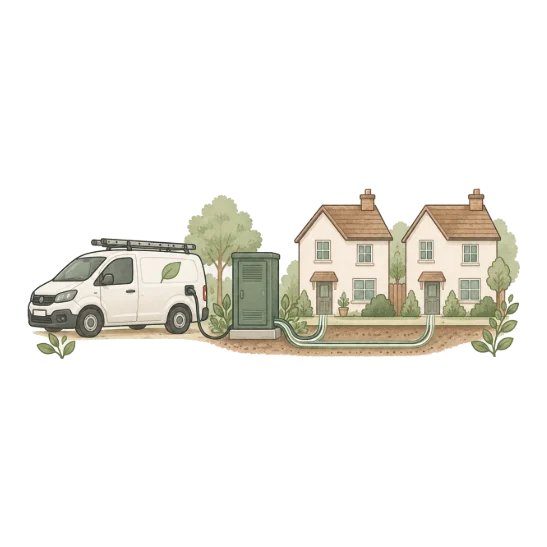
we plant a tree with every plan. that is the bit people notice. the fairer question is whether the connection itself is any kinder than the old one.
it is. not because fibre is clever, but because so much less has to be plugged in along the way.
why fibre needs less plugged in
copper sends your connection down a wire as electricity, and it fades quickly. openreach reckon about a mile. to get it any further you need boxes along the route to give it a boost. those are the green cabinets you see on street corners, and every one of them is plugged into the mains, day and night.
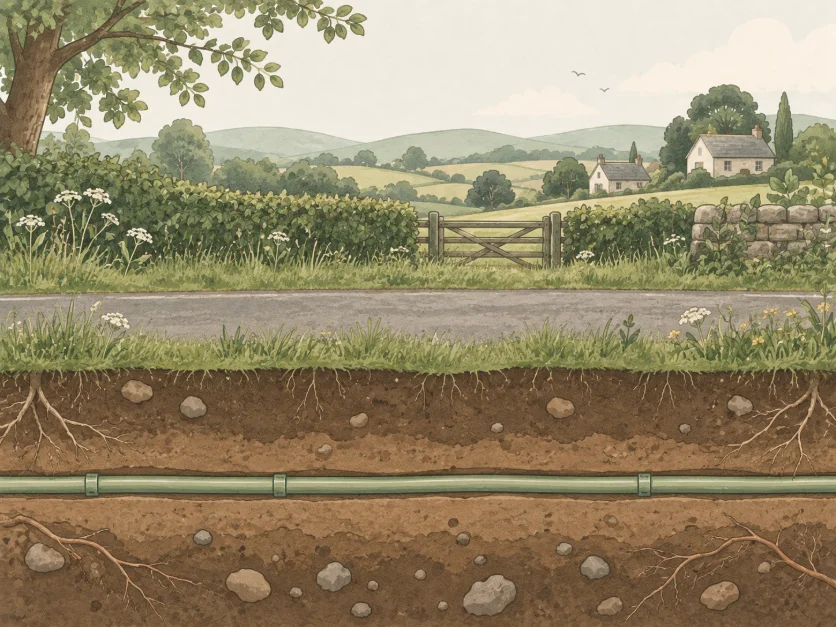
fibre sends the same thing as light down a strand of glass. light keeps going for about 120 miles before it starts to weaken, and the bits in between need no electricity at all. so there is far less switched on between the exchange and your front door.
the numbers, before your router
some researchers worked this out properly. they took six real areas, gave every home a 50mbps connection, and measured how much power each kind of network needed to run it. here is what the networks used, before anyone plugs in a router.
glass all the way to your house
the sort virgin media use
fibre to the street, copper for the last bit
so the older ways of doing it used up to about seven and a half times more power than full fibre.
the honest bit: your router eats most of the difference
then they added up all the routers in people's houses, and it looked very different. full fibre came to 360kW. the old copper-to-the-street way came to 396kW. still better, but nowhere near seven times better.
which makes sense. once the network stops using the power, the biggest thing left switched on is the box in your hall, humming away all day and all night. the researchers said the same. better routers are where the next real saving is.
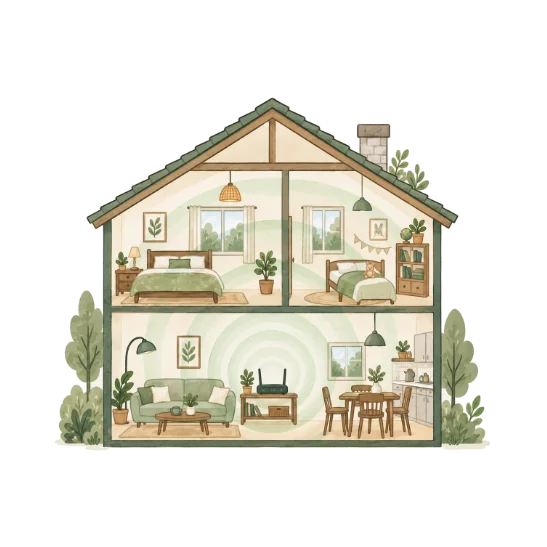
what that looks like for one house
the european commission put it another way. at 50mbps, fibre works out at about 56 units of electricity per person per year. cable works out at 88. and the faster the connection, the bigger that gap gets.
there is one more saving nobody sees, because it happens in buildings you will never go into. about 80 out of every 100 openreach exchanges are expected to shut as copper is retired. those are big rooms full of old kit, heated, cooled and powered around the clock.
one thing we will not pretend
these numbers come from a computer model of six areas in germany, not a meter reading from a street in horsham. they assume everyone takes the service and everyone wants 50mbps. and they count what a network uses once it is built, not the diggers and vans it takes to build it.
so here is what we will say. fibre uses less electricity to run than copper. every study we can find says so. we would rather leave it there than turn it into a big headline number that falls apart when you poke it.
common questions
yes, on the electricity it uses to run, and by a long way on the network side. the fair caveat is that these are modelled figures from one country, and none of them count the digging it takes to lay the cable in the first place.
if nobody is using it and nothing in the house needs it, you can. but if your phone runs through it, or you have an alarm, or someone might need to ring 999, leave it on. it is the phone line now.
hardly any. your router uses about the same whether you are watching films or fast asleep. the difference between fibre and copper is much bigger than the difference between speeds.
not the bin. most councils take small electricals, and if it came from a provider they will usually take it back. the router you already own goes through it properly.